Professional Painter vs DIY in Fort Collins
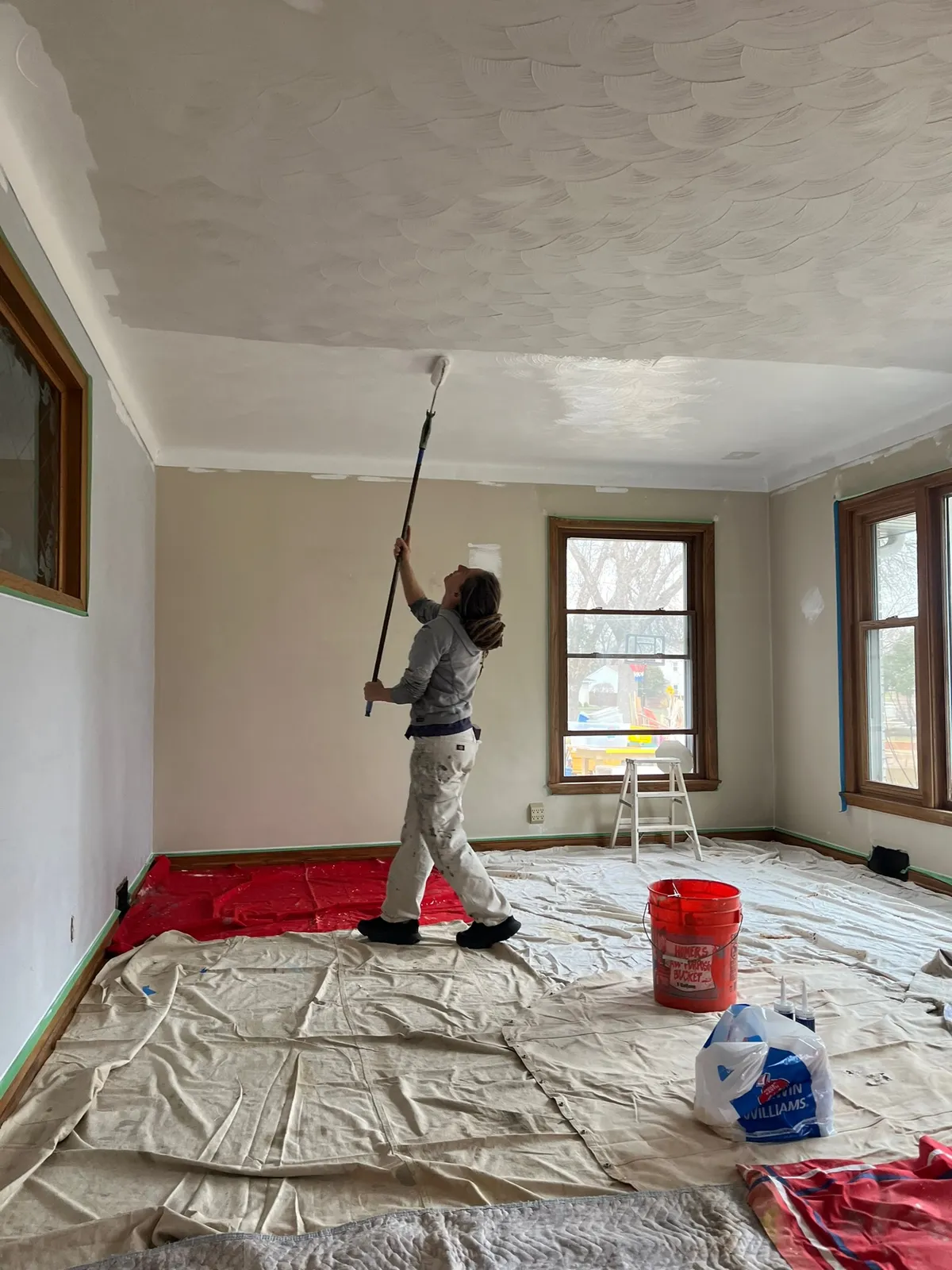
Should you paint your house yourself or hire a professional? It is one of the most common questions homeowners in Fort Collins face, and there is no single right answer. The best choice depends on the scope of the project, your skill level and available time, your budget, and the result you are hoping to achieve.
What follows is an honest comparison. We are professional painters, so we obviously have a perspective, but we also believe there are situations where DIY painting makes perfect sense. Our goal here is to help you make the decision that is right for your specific project.
When DIY Painting Makes Sense
Let us start with the cases where rolling up your sleeves and doing it yourself is a reasonable choice.
Small Interior Projects
Painting a single bedroom, a home office, or an accent wall is one of the most accessible DIY home improvement projects. If the room has standard eight-foot ceilings, the walls are in good condition, and you are staying with a similar color, a weekend project with a trip to the hardware store can produce a satisfying result.
Simple Color Refreshes
If you are repainting a room that is already in good shape — no peeling, no water damage, no significant repairs needed — and you are going from one light color to another similar light color, the margin between a DIY result and a professional result narrows. The prep work is minimal, and the application is straightforward.
Touch-Up Work
Scuffed hallways, nail holes from rearranged artwork, and minor dings are all reasonable DIY territory. Keep leftover paint from your last professional job (stored properly, it can last years) and handle small touch-ups yourself between full repaints.
You Genuinely Enjoy It
Some people find painting meditative and satisfying. If you are one of them, and you have the time and patience to do it right, there is nothing wrong with a DIY approach for the right projects.
When to Hire a Professional
There are also situations where hiring a professional painter is clearly the better investment. Here is where the DIY approach tends to fall short.
Exterior Painting
This is the biggest one. Exterior painting in Fort Collins involves working at heights, dealing with demanding weather conditions, managing fast-drying paint at altitude, and preparing surfaces that have been battered by Colorado’s UV, wind, and temperature swings. The safety considerations alone — working on ladders and scaffolding, sometimes two or three stories up — make this a job where professional experience and equipment earn their cost.
Beyond safety, the quality gap between DIY and professional exterior painting is significant. Proper exterior prep in Colorado includes power washing, scraping loose paint, sanding, priming bare or damaged areas, caulking all joints and gaps, and addressing any wood damage. Skipping or rushing any of these steps leads to paint failure that may show up within a year or two. Professional painters have the equipment, experience, and trained eye to do this prep work thoroughly.
Whole-Home Interior Projects
Painting an entire house interior is a much larger undertaking than most homeowners realize. A typical 2,000-square-foot Fort Collins home has 5,000 to 7,000 square feet of paintable wall surface, plus ceilings, trim, doors, and closets. At a realistic DIY pace, including setup, prep, painting, second coats, and cleanup, a full interior takes most homeowners three to six weeks of evenings and weekends. A professional crew can complete the same project in one to two weeks while you continue living your normal life.
High Ceilings and Difficult Access
Fort Collins has plenty of homes with vaulted ceilings, two-story foyers, and stairwells that are genuinely dangerous to paint without the right equipment and experience. Professional painters have scaffolding systems, extension poles, and the practice to work safely in these spaces. The cost of proper scaffolding rental alone can run several hundred dollars, and without experience using it, you may not be much better off than on a ladder.
Significant Prep Work
If your walls have water damage, extensive cracking, peeling paint, wallpaper that needs removal, or surfaces that need skim coating or texturing, the prep work becomes the project. This is skilled work that requires specific tools, materials, and technique. A professional crew’s prep work is often what separates a paint job that lasts a decade from one that shows wear within a year.
Cabinet Painting
Kitchen cabinets are one of the most technically demanding painting projects in a home. The finish needs to be smooth, durable, and resistant to the constant wear and moisture in a kitchen environment. Achieving a factory-like finish requires proper cleaning, degreasing, sanding, priming with a bonding primer, and applying multiple thin coats of a hard-curing paint — often with a sprayer for the smoothest result. DIY cabinet painting has one of the highest regret rates of any home improvement project.
Color Matching and Color Transitions
Achieving seamless color transitions, clean lines where walls meet ceilings, and consistent sheen across large surfaces requires practice. Professional painters have done this thousands of times. They can cut a clean line freehand at a speed that takes most DIYers hours with tape, and the result is typically sharper.
The Real Cost Comparison
The most compelling argument for DIY painting is cost savings. But the actual savings may be less than you expect once you account for all the variables.
Materials: The Visible Cost
Paint and supplies are the most obvious cost for both DIY and professional projects. For a typical bedroom in Fort Collins:
- Paint (2 gallons of quality paint): $80 to $160
- Primer (if needed): $30 to $50
- Tape, drop cloths, roller covers, brushes: $40 to $80
- Total materials: $150 to $290
A professional painting that room might cost $400 to $700 total, including materials and labor. So the material savings for DIY are roughly $150 to $450 per room. That is real money.
Equipment: The Hidden Cost
For a single room, you probably have or can cheaply acquire everything you need. But for larger projects, the equipment list grows:
- Quality roller frames, extension poles, and brush set: $50 to $100
- Drop cloths (good canvas ones): $30 to $80
- Step ladder: $80 to $200
- Extension ladder (for exterior): $200 to $500
- Sprayer (for large areas or cabinets): $150 to $500 rental, $300 to $800 purchase
- Scaffolding (for high areas): $100 to $300 rental per week
- Caulk gun, caulk, wood filler, sandpaper, scrapers: $30 to $80
For an exterior project, you might spend $400 to $1,000 on equipment rental and supplies before buying a single gallon of paint.
Your Time: The Biggest Cost
This is the factor most DIYers underestimate. Your time has value, whether you measure it in actual dollars or in the weekend activities and family time you are giving up.
Consider a full interior repaint of a 2,000-square-foot home:
- Professional crew (3 to 4 painters): 5 to 10 working days
- Experienced DIYer working evenings and weekends: 4 to 8 weeks
- First-time DIYer: 6 to 12 weeks
If you value your time at even $25 per hour and the project takes 120 hours of your labor, that is $3,000 worth of time. At $50 per hour, it is $6,000. Suddenly the gap between DIY cost and professional cost narrows considerably — and in some cases disappears.
For exterior work, the math is even more stark. A professional crew might spend 5 to 8 days on a two-story exterior that would take a solo DIYer several weeks of weekend work.
Quality and Longevity
A paint job that lasts 10 years costs half as much per year as one that lasts 5 years. Professional painters using quality materials and proper techniques consistently produce results that outlast DIY work, especially on exteriors. The prep work that professionals do — the scraping, sanding, priming, and caulking that is tedious and time-consuming — is exactly what determines how long a paint job lasts.
In Fort Collins, where exterior paint is under constant assault from UV radiation, temperature extremes, wind-driven rain, and occasional hail, the quality of the prep work is the single biggest factor in paint longevity.
The Prep Work Most DIYers Skip
If there is one section of this guide to pay special attention to, it is this one. Prep work is the biggest difference between professional and DIY results, and it is where most DIYers cut corners — not out of laziness, but because they do not realize how important each step is.
Surface Cleaning
Painting over dust, grease, cobwebs, or chalk is a recipe for adhesion failure. Professionals wash exterior surfaces thoroughly and clean interior walls to remove cooking residue, fingerprints, and dust. This step is not glamorous, but paint cannot bond to a dirty surface.
Scraping and Sanding
Loose or peeling paint must be removed completely. Painting over loose paint just means the new paint will peel off along with the old. Sanding creates a slightly rough surface profile that gives new paint something to grip. On exterior surfaces in Colorado, where old paint has been UV-damaged and chalked, sanding is essential for proper adhesion.
Priming
Primer is not just thin paint. It is a fundamentally different product designed to bond to the substrate and provide an ideal surface for the finish coat. Bare wood, repaired drywall, stained surfaces, and significant color changes all require primer. Skipping primer on these surfaces leads to uneven coverage, bleed-through, and poor adhesion.
Caulking
Gaps between trim and walls, around windows and doors, and at corner joints need to be caulked before painting. These gaps allow air and moisture infiltration, and they also create visible shadow lines that make a paint job look unfinished. Professional painters caulk methodically, and it is one of the details that makes a professional result look noticeably better.
Masking and Protection
Proper masking takes time. Professionals tape off fixtures, cover floors, protect countertops, and mask areas that should not be painted. They also know where taping is necessary and where a skilled hand can cut a clean line faster than tape. This experience saves time while maintaining precision.
The Hand-Cut Line Advantage
One of the most visible differences between professional and DIY painting is the quality of lines — where a wall meets the ceiling, where two colors meet, or where a wall meets trim.
Professional painters develop the ability to “cut in” a clean, straight line with a brush, freehand, at speed. This skill takes years to develop. A professional cutting in a room can produce lines that are as clean or cleaner than taped lines, and they can do it in a fraction of the time.
DIYers typically rely on painter’s tape, which can produce good lines but has limitations. Tape can allow paint to seep underneath if the surface is textured or the tape is not perfectly sealed. Removing tape can pull up fresh paint if the timing is not right. And taping an entire room adds hours to the project. Many professional painters use tape selectively — perhaps along ceilings or at color transitions — but rely on their brush skills for the majority of edge work.
This is not to say that good tape technique cannot produce clean results. It absolutely can. But it takes significantly more time than skilled brushwork, and the results are not always as consistent.
Safety Considerations
For exterior painting especially, safety deserves serious thought.
Working at Heights
Falls from ladders are one of the most common causes of serious injury for homeowners tackling exterior projects. Two-story homes require extension ladders reaching 20 to 30 feet, and the risk increases significantly on uneven ground, near landscaping, or on windy days — which are common in Fort Collins.
Professional painters are trained in ladder safety, have commercial-grade equipment, and often use scaffolding systems for extended work at height. They also carry workers’ compensation insurance, which means an injury on the job does not become your liability.
Chemical Exposure
Paint, primer, and solvents contain chemicals that require proper ventilation. Professionals understand which products require respirators, how to ventilate indoor spaces during application, and how to handle and dispose of materials safely.
Lead Paint
Homes built before 1978 may contain lead-based paint. Disturbing lead paint through scraping or sanding creates hazardous dust that poses serious health risks. Professional painters are trained in lead-safe work practices and many hold EPA RRP (Renovation, Repair, and Painting) certification. If your home is older and you are considering DIY exterior work that involves scraping, get a lead test first.
A Realistic Decision Framework
Here is a practical way to decide between DIY and professional for your specific project:
DIY is probably a good fit if:
- It is a single room or small interior project
- The walls are in good condition with minimal prep needed
- You have the time and patience to do it right
- You are comfortable with the tools and techniques
- Budget is your primary constraint
Hiring a professional is probably worth it if:
- The project is your home’s exterior
- Multiple rooms or the entire interior needs painting
- Significant prep work is required (peeling paint, water damage, repairs)
- The project involves high ceilings, stairwells, or difficult access
- You value your time and want the project done quickly
- You want the longest-lasting, most polished result
- Safety is a concern (heights, lead paint, chemical exposure)
The hybrid approach: Some homeowners save money by doing portions of the work themselves. You might handle the prep work on an interior painting project — moving furniture, removing outlet covers, filling nail holes — and have professionals do the actual painting. Or you might paint the easy rooms yourself and hire professionals for the challenging spaces. This can be a practical compromise that saves money without sacrificing quality where it matters most.
Making Your Decision
There is no shame in painting a room yourself, and there is no shame in calling a professional. Both are valid choices depending on the circumstances. What matters is that the work gets done well, that your home is protected, and that you are happy with the result.
If you are leaning toward professional help, or if you just want a second opinion on whether your project is a reasonable DIY undertaking, we are always happy to take a look and give you an honest assessment. With over 25 years of painting experience across Colorado and a home base here in Fort Collins, we will tell you straight whether we think your project is something you can handle yourself or whether professional help would serve you better.
Reach out any time — no pressure, just honest advice from people who love what they do.